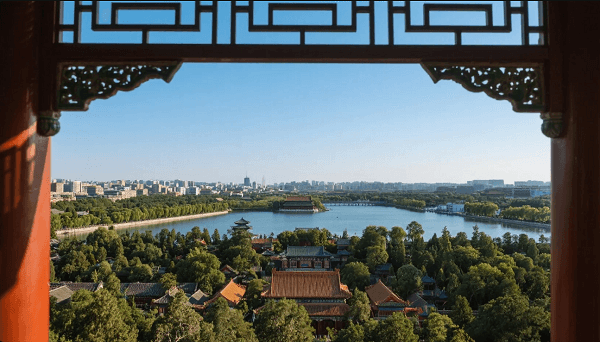
Navigating the historical landscape of Peking—internationally recognized as Beijing—requires more than a simple map. In addition, it requires an understanding of 3,000 years of urban evolution. It also reflects 800 years of history as a capital city.This Peking travel guide serves as a technical overview for travelers and organizations seeking to master the complexities of the city’s imperial architecture and modern logistical infrastructure.
Beijing functions as a living museum of geopolitical history. It shows the symmetrical precision of the Central Axis. It also displays the engineering marvels of Ming Dynasty fortifications.Understanding these landmarks requires a perspective that values architectural integrity, historical preservation, and the logistical realities of high-capacity tourism management.
The Imperial Core: Architectural Symmetry and Symbolic Power
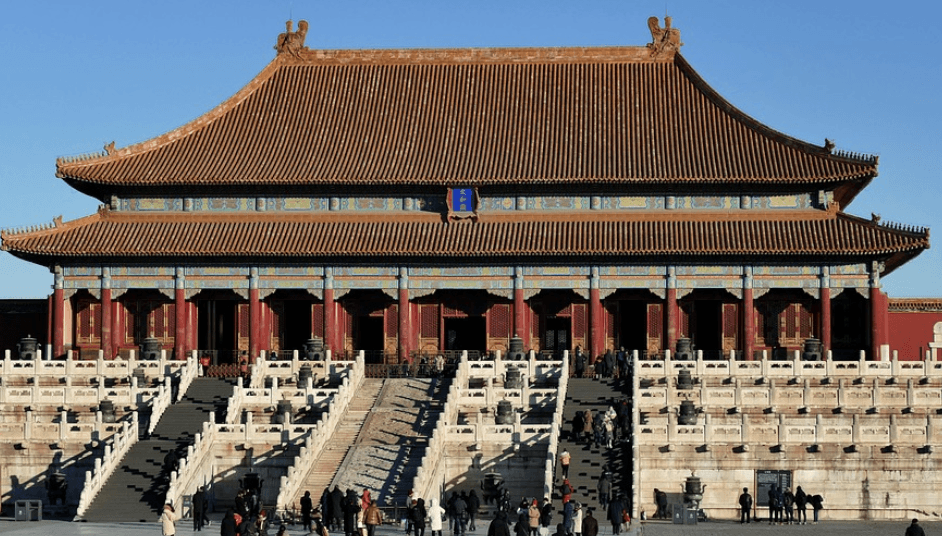
The Forbidden City (Palace Museum) represents the zenith of traditional Chinese palatial architecture. The complex contains 980 buildings. Together, they represent cosmic order and reinforce the emperor’s supreme authority.
When planning a visit, logistics managers and travelers must account for strict daily visitor quotas. The site operates on a mandatory pre-booking system that aligns with national heritage preservation standards. To appreciate the technical depth of the palace, focus on the “Three Great Halls,” which demonstrate the sophisticated post-and-beam construction methods that allow for seismic flexibility.
Strategic considerations for the Forbidden City:
- Access Point: Entry is strictly through the Meridian Gate (Wu Men).
- Directional Flow: The historical movement follows a South-to-North axis.
- Preservation Constraints: Many interior halls are viewed from exterior thresholds to maintain humidity and structural stability.
The Great Wall: Engineering Variations and Sector Selection
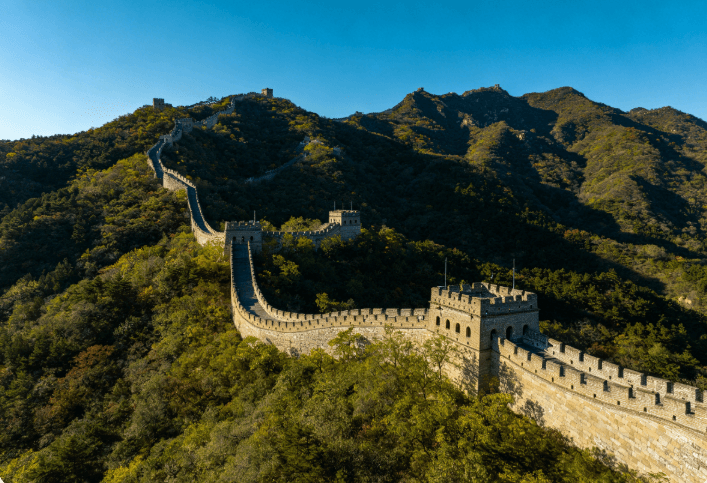
The Great Wall is not a singular structure but a vast network of defensive fortifications. From an engineering standpoint, the sections surrounding Peking showcase different construction materials, ranging from rammed earth to sophisticated kiln-fired bricks used during the Ming Dynasty.
For travelers prioritizing structural integrity and accessibility, Mutianyu and Badaling are the best options. They offer the most preserved examples of Ming defensive architecture. These sites feature advanced drainage systems and watchtower placements designed for strategic communication.
| Sector | Difficulty Level | Distance from Central Peking | Key Technical Feature |
| Mutianyu | Moderate | 75 km | Fully restored granite base and watchtowers |
| Badaling | Low (Accessible) | 70 km | High-capacity infrastructure and stone masonry |
| Jiankou | Extreme | 80 km | “Wild” wall with original 14th-century brickwork |
| Simatai | Moderate/High | 120 km | Original Ming features and night-time illumination |
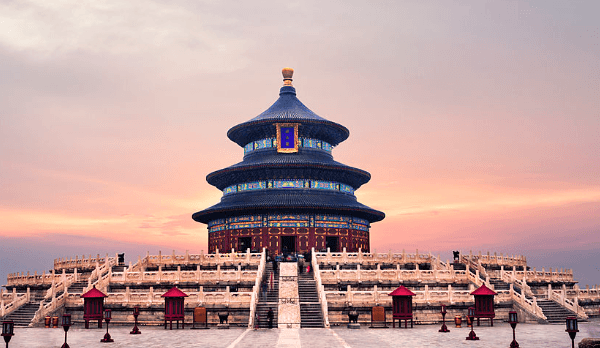
The Temple of Heaven: Ritualistic Geometry and Acoustics
The Temple of Heaven (Tiantan) is a prime example of ritualistic architecture where geometry meets theology. The complex was designed for the “Heaven Worship Ceremony,” performed by Emperors to ensure a successful harvest. Its design incorporates square bases (representing Earth) and circular roofs (representing Heaven).
Technically, the Hall of Prayer for Good Harvests is a masterpiece of wooden joinery. It was constructed without a single nail, relying entirely on a sophisticated system of pillars and brackets to support its massive weight. The site also features notable acoustic phenomena, such as the Echo Wall, which demonstrates the precision of Qing Dynasty masonry and sound wave reflection.
The Summer Palace: Hydraulic Engineering and Landscape Design
As the world’s most well-preserved imperial garden, the Summer Palace (Yiheyuan) is a study in large-scale hydraulic engineering and “borrowed scenery” (Jingjie). The expansion of Kunming Lake was a massive earth-moving project that redistributed soil to create Longevity Hill, balancing the site’s topography.
The Long Corridor, stretching 728 meters, serves as a functional art gallery, featuring over 14,000 traditional paintings. For logistical planning, the site is best explored via waterborne transport on the lake, which provides a comprehensive view of the Seventeen-Arch Bridge—a structural marvel that manages water flow while providing a ceremonial pathway.
Navigating the Hutongs: Urban Planning and Preservation
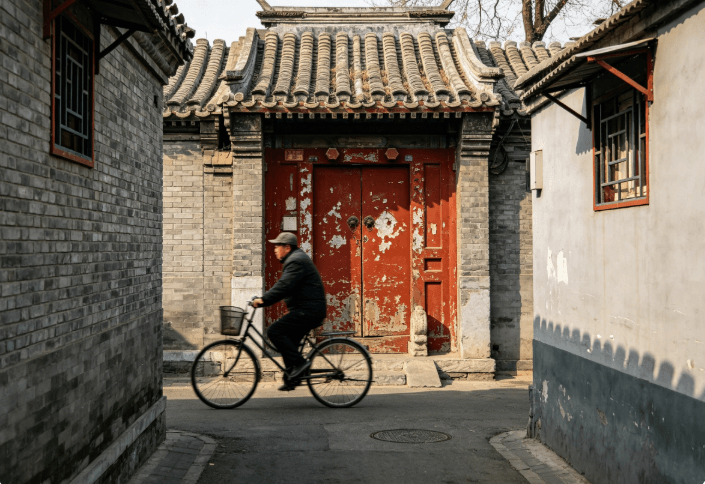
The Hutongs—narrow alleys formed by lines of Siheyuan (traditional courtyard houses)—represent the original residential fabric of Peking. These neighborhoods are critical for understanding the “human scale” of ancient urban planning.
In districts like Shichahai or Nanluoguxiang, the layout follows strict Feng Shui principles and social hierarchies. The orientation of the main gates and the height of the doorsteps traditionally indicated the rank of the residents. Modern preservation efforts now balance these historical layouts with the requirements of 21st-century infrastructure, including updated sewage and electrical grids.
Strategic Logistics for Modern Peking
Modern Beijing is a global hub supported by a sophisticated transportation network. To navigate the city efficiently, travelers should utilize the high-speed rail links (HSR) and the extensive Beijing Subway system, which is one of the longest and busiest in the world.
For organizations coordinating group travel or high-level visits, leveraging a local ground operator is essential for managing site permits and specialized transport. Professional services, such as those provided by SinoTrip’s Beijing City Category, offer the logistical backbone needed to handle the nuances of Peking’s tourism landscape, from private transfers to expert-led historical tours. These services ensure that the operational aspects of a trip—such as timing, permit acquisition, and multi-site coordination—are handled with professional precision.
PREGUNTAS FRECUENTES
What is the best time of year to visit Peking for optimal visibility?
The “Golden Autumn” (September to October) typically offers the most stable climate, low humidity, and the highest visibility for visiting the Great Wall and outdoor imperial sites. Spring (April to May) is also favorable, though it occasionally experiences sandstorms from the Gobi Desert.
Does Beijing offer visa-free entry for international travelers?
Yes, Beijing participates in the 144-hour visa-free transit policy for citizens of over 50 countries. This allows travelers with a confirmed onward ticket to a third country to explore Peking for up to six days without a pre-arranged visa.
How do I manage ticketing for the Forbidden City?
The Palace Museum requires real-name registration and bookings must be made several days in advance through the official WeChat mini-program or authorized travel partners. Tickets are linked to your passport number and are strictly non-transferable.
Is the Great Wall accessible for travelers with limited mobility?
The Badaling sector is equipped with cable cars and ramps designed to accommodate wheelchairs and those with limited mobility. Mutianyu also offers cable car and chairlift access to the upper fortifications, though the wall surface itself remains uneven.
What are the essential mobile applications for navigating Beijing?
Travelers should install Alipay or WeChat Pay for all transactions, as Peking is a largely cashless society. For navigation, Amap (Gaode) or Baidu Maps are the most accurate, while translation apps like Pleco or Google Translate (with a VPN) are indispensable for communication.
Reference Sources
- UNESCO World Heritage Centre: The Imperial Palaces of the Ming and Qing Dynasties – Official documentation on historical significance and preservation.
- ICOMOS (International Council on Monuments and Sites): Technical Evaluation of the Great Wall – Engineering and conservation standards for defensive structures.
- National Cultural Heritage Administration (NCHA) of China: Museum Statistics and Cultural Regulations – Current data on heritage site management and visitor policies.
- The Palace Museum (Beijing): Official Research and Conservation Archives – Detailed architectural specifications of the Forbidden City.