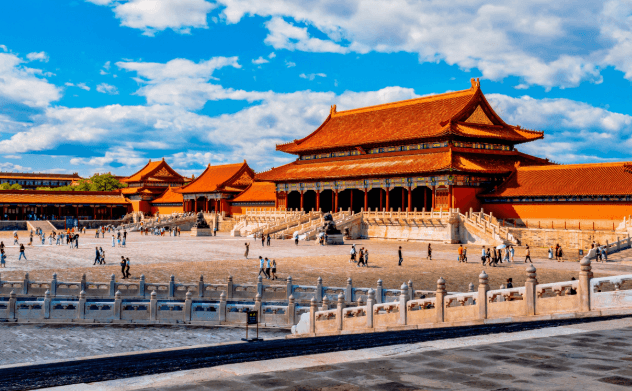
The Forbidden City, officially known as the Palace Museum, stands as the world’s largest palatial complex, spanning over 720,000 square meters in the heart of Beijing. For five centuries, this massive labyrinth of wood and stone served as the reclusive sanctuary for 24 emperors of the Ming and Qing dynasties. Navigating this site requires more than just a map; it requires an understanding of imperial hierarchy, cosmological symbolism, and modern logistical constraints.
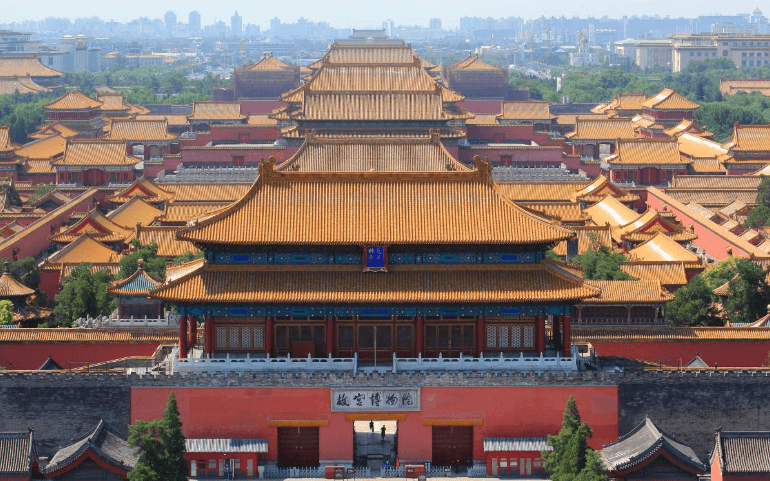
To the uninitiated, the 980 surviving buildings can feel repetitive. However, the architecture follows a strict “Central Axis” logic that mirrors the ancient Chinese belief in the Emperor as the “Son of Heaven” at the center of the universe. This guide provides the technical and historical framework necessary to appreciate the engineering marvels and cultural depth of the Forbidden City.
The Architectural Blueprint: Understanding the Central Axis
The Forbidden City is organized along a north-south meridian. This layout is not accidental but is a physical manifestation of Confucian order. The complex is divided into two primary zones: the Outer Court and the Inner Court.
- The Outer Court (Southern Section): This area was designed for public ceremonies and state affairs. It features expansive courtyards and massive halls intended to overwhelm visitors with the scale of imperial power.
- The Inner Court (Northern Section): This served as the domestic quarters for the Emperor, his empresses, and concubines. The scale is noticeably more intimate, with gardens, libraries, and private shrines.
| Feature | Outer Court (State) | Inner Court (Private) |
| Primary Function | Coronations, weddings, state exams | Daily life, residence, worship |
| Atmosphere | Formal, vast, intimidating | Intimate, decorative, functional |
| Key Structures | Salón de la Armonía Suprema | Palace of Heavenly Purity |
| Architectural Style | High-level “Hip” roofs, heavy use of marble | Garden landscapes, intricate interiors |
Engineering the Eternal: Materials and Symbolism
The Dougong Bracket System
One of the most critical technical elements is the Dougong (cap and block) system. These interlocking wooden brackets transfer the massive weight of the overhanging ceramic-tiled roofs to the vertical pillars. The complexity and number of layers in a Dougong system directly indicated the rank of the building and its inhabitant.
Color and Number Logic
In the Forbidden City, color is a regulatory language:
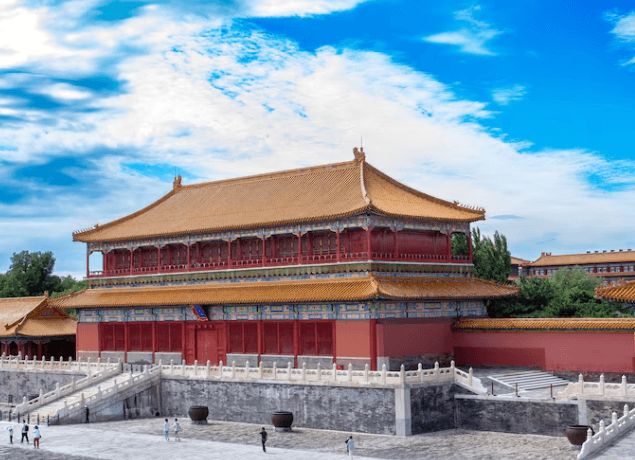
- Yellow: Symbolizing the earth and the center of the five elements, yellow was reserved exclusively for the Emperor. Almost all roofs feature yellow glazed tiles.
- Red: Representing fire, joy, and fortune, red is the dominant color for walls and pillars.
- Nine: In Chinese numerology, nine is the highest odd number, representing the “ultimate” or the Emperor. You will notice 9,999.5 rooms (legendarily) and nine animals on the roof ridges of the most important halls.
Navigating the Museum: Strategic Routing
Most visitors enter through the Meridian Gate (Wumen) in the south and exit through the Gate of Divine Prowess (Shenwumen) in the north. This “One-Way” policy is strictly enforced to manage the flow of up to 80,000 daily visitors.
1. The Three Great Halls
The centerpiece of the Outer Court consists of the Hall of Supreme Harmony, the Hall of Central Harmony, and the Hall of Preserving Harmony. The Hall of Supreme Harmony is the highest-ranking building in the empire, sitting on a three-tiered marble terrace. Look for the bronze incense burners and the “Luding” (mirror ball) hanging from the ceiling, which was believed to fall and strike any “usurper” who sat on the throne.
2. The Treasure Gallery (Eastern Wing)
For those interested in the material wealth of the Qing Dynasty, the Treasure Gallery (located in the Palace of Tranquil Longevity) is a must-visit. It requires an additional small fee but houses the world-famous “Jadeite Cabbage,” elaborate gold tea sets, and the Empress Dowager Cixi’s jewelry.
3. The Imperial Garden
Located at the northernmost end, the garden offers a shift from the rigid symmetry of the halls. It features “rockeries” made of Taihu stones, ancient cypresses, and the Pavilion of Imperial Scenery, where the imperial family would climb to view the scenery outside the walls.
Essential Visitor Logistics and Compliance
The Palace Museum has transitioned to a fully digital, real-name registration system. Understanding the current regulatory environment is crucial for a successful visit.
- Ticket Reservations: Tickets must be booked in advance via the official website or verified platforms. For international travelers, your passport number is your “ticket.” Physical tickets are no longer issued.
- Operating Hours: The museum is typically closed on Mondays (except for national holidays). During peak season (April to October), the museum opens at 8:30 AM and closes at 5:00 PM.
- Security Protocol: All visitors must pass through multiple security checkpoints. Prohibited items include lighters, knives, and professional-grade drones.
- The “Palace Museum” Identity: It is important to distinguish between the physical Forbidden City and the Palace Museum entity. The museum curates over 1.8 million artifacts, many of which are rotated through temporary exhibitions in the side galleries.
Expert Practical Tips for the Modern Traveler
- Arrive Early: The queue for security at the Meridian Gate can take 30–60 minutes during peak times. Aim to arrive at the Tiananmen security checkpoint by 8:15 AM.
- Hydration and Footwear: You will likely walk 5–8 kilometers during a standard tour. There is very little shade in the Outer Court courtyards, and the stone floors are uneven.
- The Jingshan View: After exiting the North Gate, cross the street to Jingshan Park. The climb to the top of the central hill takes 10 minutes and provides the only panoramic view of the Forbidden City’s entire layout.
- Audio Guides: While signage has improved, the official audio guides (available at the Meridian Gate) provide location-based storytelling that explains the “invisible” history of the concubines and court eunuchs.
PREGUNTAS FRECUENTES
Q: Can I buy tickets at the gate of the Forbidden City?
A: No. The Palace Museum no longer sells on-site tickets. All visitors must book online at least several days in advance, as daily quotas are often reached quickly.
Q: Is the Forbidden City accessible for travelers with mobility issues?
A: Yes, there is a designated barrier-free route. However, because the site is a protected heritage area, many of the high wooden door sills and marble stairs remain. Wheelchairs are available for rent at the Meridian Gate.
Q: How long does a thorough Forbidden City guide suggest for a full visit?
A: A standard “Central Axis” walk takes approximately 2 to 3 hours. A comprehensive visit that includes the Treasure Gallery and the Clock Gallery requires at least 5 to 6 hours.
Q: Why is it called the “Forbidden” City?
A: In ancient times, the Emperor was considered the Son of Heaven. As his residence was a terrestrial reflection of the Purple Palace (the North Star), no one could enter or leave the palace without his express permission.
Q: Is there a dress code for visiting the Palace Museum?
A: There is no formal dress code, but respectful attire is recommended. Due to the significant amount of walking on stone surfaces, high-performance walking shoes are highly advised over sandals or formal footwear.
Reference Sources
- UNESCO World Heritage Centre: Imperial Palaces of the Ming and Qing Dynasties in Beijing and Shenyang
- The Palace Museum Official Research: Documentation on the conservation of wooden structures and the Dougong system.
- ICOMOS (International Council on Monuments and Sites): Technical evaluation reports on the preservation of the Forbidden City’s Central Axis.
- SinoTrip Cultural Insights: Technical data on visitor logistics and the digital reservation transition for the Palace Museum.