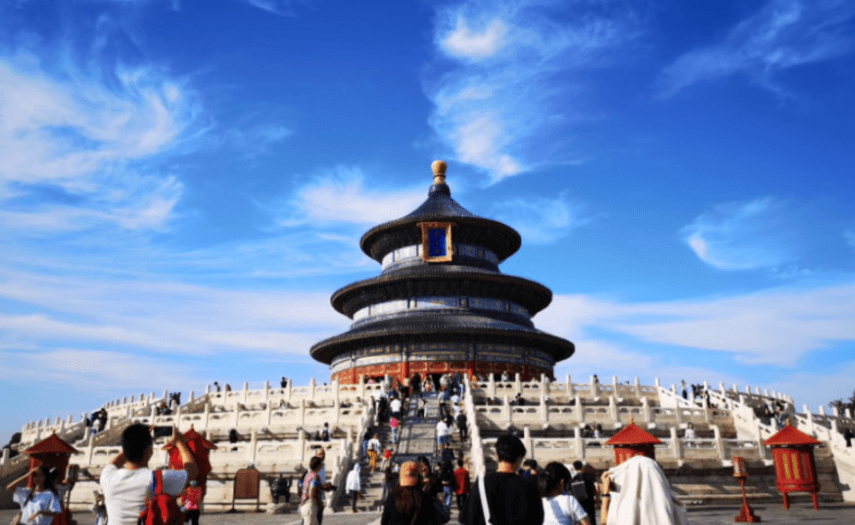
The Temple of Heaven is one of Beijing’s most rewarding heritage visits because it combines monumental architecture, ritual history, and a large public park in a single walkable complex. It was created for Ming and Qing emperors to perform ceremonies for heaven and a good harvest, rather than as a residence or ordinary religious temple. Today, a thoughtful visit helps you see the site as an interconnected ceremonial landscape—not simply a photograph of one famous hall. This guide explains what to see, how to structure your visit, and what to confirm before you go.
Why this heritage complex matters
UNESCO inscribed the Temple of Heaven on the World Heritage List in 1998. Its description places the foundation of the complex in the first half of the fifteenth century and explains that its layout and buildings express the relationship between heaven and earth in traditional Chinese cosmology.[1] The original Altar of Heaven and Earth was completed in 1420; later Ming changes separated sacrifices to heaven and earth, and the complex reached its present overall arrangement after Qing-era reconstruction.[1]
The site covers about 273 hectares and is structured as an inner and outer precinct. Beijing’s official visitor information notes the symbolic contrast between the semicircular northern area and square southern area, reflecting the traditional idea that heaven is round and earth is square.[2] This context makes the route more meaningful: you are moving through spaces designed for ceremony, hierarchy, procession, and reflection.
The three essential sights
| Sight | Why it is important | How to experience it |
|---|---|---|
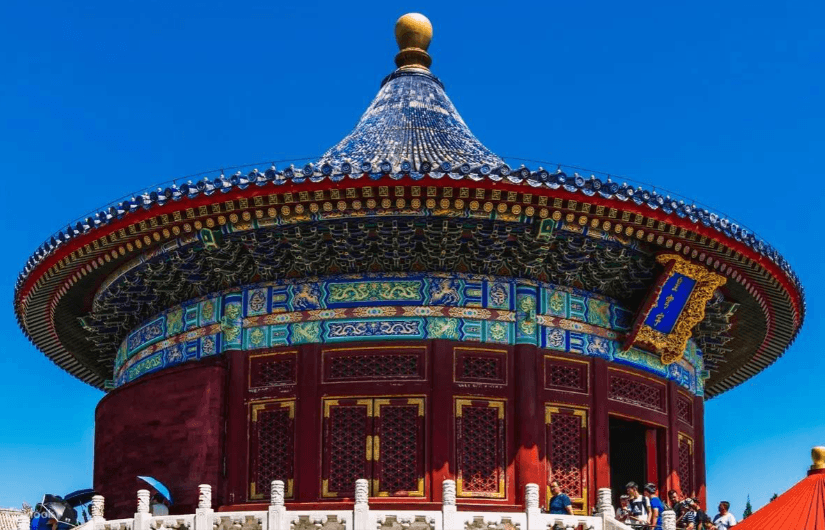
| Hall of Prayer for Good Harvests | The best-known landmark and the visual focus for most first-time visitors. | Arrive early, look beyond the façade, and allow time to study the setting and roof profile. |
| Danbi Bridge | The raised route connects key ceremonial spaces and makes the intended progression through the complex legible. | Walk it at an unhurried pace rather than treating it only as a transit path. |
| Imperial Vault of Heaven and Circular Mound Altar | These southern structures help explain the site’s sacrificial purpose and formal geometry. | Visit after the Hall of Prayer for Good Harvests to follow a clear north–south sequence. |
Beijing’s official guide identifies the Hall of Prayer for Good Harvests, the Circular Mound Altar, and the Imperial Vault of Heaven as the principal must-see buildings.[2] If time is limited, prioritize these three places and the connecting Danbi Bridge. A two- to three-hour window is a practical starting point for a first visit, with additional time for the park landscape and seasonal activity.
A sensible route through the complex
For many independent travelers, beginning at the East Gate is a straightforward option because the Hall of Prayer for Good Harvests can become the first major visual anchor. From there, continue along the Danbi Bridge toward the Imperial Vault of Heaven and Echo Wall area, then finish at the Circular Mound Altar or exit through a gate that suits your next stop. The official seasonal route suggestions also include an east-to-south winter walk and an east-to-north autumn walk, showing that gate choice can be adapted to weather, daylight, and the rest of your Beijing itinerary.[2]
Do not over-plan every minute. The park is also a local public space, so leave room to observe everyday morning movement and social activity without interrupting it. Keep voices low inside historic buildings, stay within visitor boundaries, and avoid turning ceremonial structures into photo props. A respectful pace improves both the experience and crowd flow.
Tickets, opening hours, and transport
Visitor logistics can change by season, holiday, conservation work, or ticketing policy. Beijing’s official English listing currently distinguishes a peak season from 1 April to 31 October and an off season from 1 November to 31 March; it also publishes a final-entry time and separate admission and combined-ticket options.[2] Treat those details as a planning reference, not a substitute for a same-day confirmation. Before leaving, check the official channel for current opening times, which buildings are accessible, ticket type, identification requirements, and any reservation rule.
The same official guide lists the East Gate area near Tiantandongmen Station on Metro Line 5, which is useful for an east-gate route.[2] Metro is often the clearest choice for visitors who do not need a private vehicle. If you are travelling with children, older relatives, limited mobility, or a tightly connected sightseeing schedule, confirm your gate, walking distance, and pickup arrangement before committing to a route.
Choosing the right type of visit
| Your priority | Best approach | What to prepare |
|---|---|---|
| Architecture and photography | Arrive near opening time and focus on the Hall of Prayer for Good Harvests, Danbi Bridge, and southern altar sequence. | Check weather, permitted access, and extra time for queues. |
| History and interpretation | Use an audio guide, trusted reading, or a knowledgeable guide who can explain ritual symbolism. | Prepare questions about layout, imperial ceremony, and Qing/Ming changes. |
| Efficient Beijing sightseeing | Pair the Temple of Heaven with a route that has compatible timing and transport. | Confirm tickets, travel time, and the order of the day before booking. |
Travelers who prefer one organized itinerary can review SinoTrip’s two-day Beijing route that includes the Temple of Heaven. For broader destination research, the site’s China city guide collection can help you place the visit within a longer trip. Availability, inclusions, group size, guide language, transport, and entry arrangements should be confirmed directly before purchase; this guide does not assume they are included.
Pre-visit checklist
Use this compact checklist the day before your visit:
- Confirm the current opening hours, final entry, ticket type, and whether a reservation is required.
- Choose a gate and a route that match your next destination rather than backtracking across the park.
- Allow extra time for security checks, ticketing, and popular building queues.
- Wear comfortable footwear; the complex is large and a visit involves substantial walking.
- For a guided or private arrangement, request confirmation of the itinerary, language, pickup point, vehicle, attraction tickets, and cancellation terms.
Frequently asked questions
How long should I allow for the visit?
Plan roughly two to three hours for the principal buildings and a measured walk through the grounds. Add time if you want to linger in the park, visit during a busy period, or join an interpretive tour.
Is it worth visiting if I have already seen the Forbidden City?
Yes. The two places serve different historical purposes. The Forbidden City was the imperial palace, while this site was the major ceremonial complex associated with sacrifices to heaven and prayers for harvests.[1] Seeing both makes the broader imperial city easier to understand.
Which building should I see first?
The Hall of Prayer for Good Harvests is the natural first priority for many visitors. Then follow the Danbi Bridge to the Imperial Vault of Heaven and Circular Mound Altar for a more coherent ceremonial sequence.
Can I rely on published hours and ticket prices?
Use official published information as a guide, but reconfirm close to your visit. Seasonal schedules and visitor procedures may be adjusted, particularly around public holidays or site operations.
What should I ask a tour provider before booking?
Ask for written confirmation of the exact attractions, timing, guide language, private or shared format, transport, ticket responsibility, pickup details, and cancellation policy. Any service not clearly stated should be treated as subject to confirmation.
Make the visit meaningful
This heritage complex rewards visitors who slow down. Its value lies in the relationship between architecture, landscape, ritual movement, and ideas about heaven and earth—not in ticking off a single famous pavilion. Start early when possible, verify live logistics, choose a route with purpose, and reserve enough time to connect the three main buildings. That approach turns a short stop into a clearer understanding of Beijing’s imperial heritage.
References
[1] UNESCO World Heritage Centre, “Temple of Heaven: an Imperial Sacrificial Altar in Beijing.” Accessed 18 August 2026.
[2] Beijing Municipal Government, “Temple of Heaven.” Accessed 18 August 2026.