
Sichuan Travel Guide 2026: The Best Way to Plan Your Tour
Sichuan is a large region with many different landscapes. It goes from the flat Chengdu Plain to the high Himalayan peaks. This Sichuan Travel Guide helps you understand local travel and seasonal changes. You will need more than just a map to explore Southwest China.
You may want to see the ancient Sanxingdui ruins or the clear waters of Jiuzhaigou. You might also want to try the famous local food. This Sichuan Travel Guide provides the best information to help you plan your trip perfectly.

The Geography of Diversity: Choosing Your Sichuan Route
Understanding Sichuan begins with its topography. The province is roughly divided into two halves: the Sichuan Basin to the east and the High Plateau to the west.
- The Chengdu Core: The provincial capital serves as the logistical hub. It is a center for Taoist history, panda conservation, and the world’s first “UNESCO City of Gastronomy.”
- The Northern Alpine Arc: Home to Jiuzhaigou and Huanglong. These areas are characterized by travertine pools and karst landforms.
- The Southern Heritage Corridor: Dominated by the Leshan Giant Buddha and Mount Emei, focusing on ancient Buddhist traditions and architectural feats.
- The Western Kham Highlands (Garze & Aba): This is the gateway to the Tibetan Plateau. It features rugged mountains, nomadic cultures, and high-altitude monasteries.
Natural Wonders: Beyond the Postcard
Jiuzhaigou and the Logic of Karst Landscapes
Jiuzhaigou National Park is a UNESCO World Heritage site renowned for its multi-level waterfalls and colorful lakes. The “color” of the water is a result of high calcium carbonate concentrations and the reflection of the surrounding alpine forest.
- Strategic Timing: While autumn (October) offers the famous “five-color” foliage, the “blue ice” season in late winter provides a stark, crowd-free alternative for photographers.
- Logistics Note: Given the remote location (a 400km drive from Chengdu), many travelers opt for private transfers to navigate the winding mountain roads safely while stopping at intermediate points like Songpan Ancient Town.
The Giant Panda Conservation Strategy
Sichuan is the ancestral home of the Giant Panda. Rather than just “viewing” animals, experts recommend understanding the conservation tiers:
- Chengdu Research Base: Best for seeing cubs and red pandas within the city limits.
- Dujiangyan Panda Base: Famous for its volunteer programs and its proximity to the ancient Dujiangyan Irrigation System.
- Wolong National Nature Reserve: The “real” wild habitat where reintroduction research happens, located deeper in the mountains.

Cultural Depth: From Bronze Age Mysteries to Living Traditions
The Sanxingdui Paradigm Shift
The recent excavations at Sanxingdui have rewritten Chinese history. These Bronze Age artifacts—massive bronze masks with protruding eyes and “spirit trees”—suggest a sophisticated civilization distinct from the Yellow River Valley. A visit here is essential for anyone interested in archaeology and the “Shu” culture.
The Leshan-Emei Spiritual Axis
The Leshan Giant Buddha, carved into a cliff face at the confluence of three rivers, was originally built to calm the turbulent waters for shipping vessels.
- Expert Insight: To truly appreciate the scale, one must view the Buddha from the river via ferry. The walking path down the “Nine Turns Plank Road” provides detail, but the river view provides the context of its 71-meter stature.
The Science of Sichuan Flavor: More Than Just “Spicy”
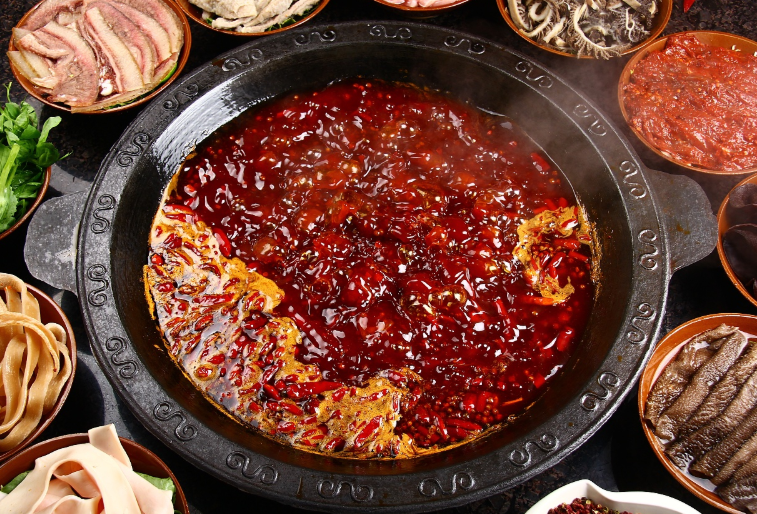
Sichuan cuisine (Chuan Cai) is often misunderstood as being purely about heat. In reality, it is built on the concept of “Mala”—the combination of Ma (numbing) from the Sichuan peppercorn and La (spicy) from dried chilies.
- The Soul of the Food: The “Pixian Bean Paste” (Doubanjiang) is the “soul of Sichuan cuisine.” It is a fermented paste of broad beans and chilies that provides the savory depth in dishes like Mapo Tofu.
- Flavor Profiles: Traditional Sichuan cooking utilizes 24 distinct flavor profiles, including “Fish-fragrant” (sweet, sour, and savory with no actual fish), “Strange-flavor” (a complex mix of sesame, sugar, vinegar, and spice), and “Tea-smoked.”
- The Tea House Culture: To understand Chengdu’s social fabric, one must spend an afternoon in a traditional tea house (like those in People’s Park). It is an exercise in “slow life” (Man Shenghuo), involving bamboo chairs, jasmine tea, and communal conversation.
Travel Logistics and Seasonal Planning
| Season | Climate Characteristics | Best For |
| Spring (Mar – May) | Temperate, blooming blossoms. | Mount Emei hiking & Chengdu city tours. |
| Summer (Jun – Aug) | Humid in basin, cool in mountains. | Escaping the heat in Western Sichuan/Garze. |
| Autumn (Sept – Nov) | Crisp air, stable weather. | Peak Season. Jiuzhaigou foliage & trekking. |
| Winter (Dec – Feb) | Chilly/Foggy in basin, snowy in peaks. | Hot springs and budget-friendly alpine scenery. |
Navigating the Province
While China’s high-speed rail (HSR) network connects Chengdu to Leshan and even towards the fringes of the northern mountains, the “Last Mile” in Sichuan is often mountainous. For families or professional groups, the transition from HSR stations to remote scenic spots like Huanglong or the Western Sichuan plateau is most efficiently managed via specialized regional transport services, which offer the flexibility that fixed bus schedules lack.
자주 묻는 질문
What is the best way to prevent altitude sickness in Western Sichuan?
Gradual ascent is key. If traveling to areas like Daocheng Yading or Litang (above 4,000m), spend at least two nights in Chengdu or Kangding (approx. 2,500m) to acclimatize. Avoid strenuous exercise and alcohol during the first 24 hours at high altitude.
Is it possible to see pandas and the Giant Buddha in one day?
While technically possible with a very early start and private transport, it is not recommended. Each site deserves 3-4 hours of exploration. A better strategy is to combine Leshan with Mount Emei over two days.
How spicy is the food for international travelers?
Most restaurants in tourist areas can adjust the “spiciness level.” You can request “Wei La” (slight spice) or “Bu La” (not spicy). However, the “Ma” (numbing sensation) is intrinsic to many dishes and is often what travelers find most unique.
Do I need a special permit for Western Sichuan?
For most of the Sichuan province (Aba and Garze prefectures), a standard Chinese visa is sufficient for most nationalities. However, if you plan to cross into the Tibet Autonomous Region (TAR) from Sichuan, a separate Tibet Travel Permit is mandatory.
Reference Sources:
- UNESCO World Heritage Centre: Sichuan Giant Panda Sanctuaries.
- Journal of Ethnic Foods: The evolution and flavor chemistry of Sichuan Peppercorns.
- Sichuan Provincial Administration of Cultural Heritage: Sanxingdui Archaeological Reports.
- China Railway (12306) High-Speed Network Maps.


