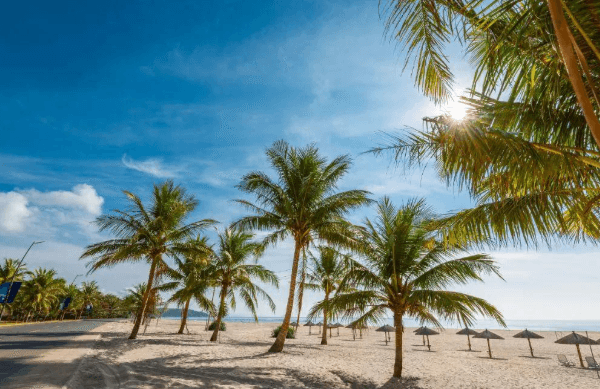

Hainan Island serves as China’s only tropical province, positioned at the same latitude as Hawaii. Often referred to as the “Hawaii of the East,” this island has evolved from a remote fishing outpost into a sophisticated Free Trade Port (FTP) and international tourism destination. For the modern traveler, Hainan offers a unique blend of high-end luxury resorts, ancient Li and Miao indigenous culture, and some of the most advanced high-speed infrastructure in the world. Navigating this 33,900-square-kilometer island requires an understanding of its distinct regional climates, specialized visa policies, and logistical frameworks.
Navigating the 30-Day Visa-Free Entry Policy
For 2026, travelers from 59 countries can enter Hainan visa-free for 30 days. Requirements include arriving on a direct international flight and registering passport details with a licensed travel agency 48-72 hours before arrival. This allows full mobility within Hainan’s independent customs zone.
To utilize this policy, travelers must book their trip through a travel agency registered in Hainan. The agency submits the passport information to the Exit and Entry Administration at least 48 hours before arrival. Visitors are permitted to stay within Hainan province for up to 30 days. It is critical to note that this policy does not allow travel to mainland China; if you plan to visit Shanghai or Beijing after Hainan, a standard “L” visa is still required.
Understanding Hainan’s Regional Geography and Climate
Hainan is topographically diverse, featuring a mountainous interior surrounded by a flat coastal perimeter. The island is divided into two primary climatic zones: the subtropical north and the tropical south.
- Haikou (The North): The provincial capital is a “City of Greenery.” It experiences cooler winters (January temperatures average 16°C/61°F) and serves as the cultural and administrative hub.
- Sanya (The South): The primary tourism engine. Sanya enjoys year-round tropical weather, with winter temperatures rarely dipping below 20°C (68°F).
- Central Highlands: Home to the Hainan Tropical Rainforest National Park, a UNESCO World Heritage tentative site. This region is significantly cooler and more humid, providing a sanctuary for the endangered Hainan Gibbon.
Comparative Analysis of Sanya’s Primary Bays
For most travelers using a Hainan travel guide, the priority is selecting the correct base in Sanya. The city’s coastline is divided into five distinct bays, each catering to different logistical needs and travel styles.
| Bay Name | Water Quality | Vibe & Crowd | Ideal For |
| Yalong Bay | Exceptional | Upscale, Private | Luxury seekers, families, swimming |
| Haitang Bay | High (Strong Currents) | Ultra-Luxury, Quiet | Duty-free shopping, secluded retreats |
| Sanya Bay | Moderate | Local, Crowded | Budget travelers, sunset views, transit |
| Dadonghai | Good | Vibrant, Social | Water sports, nightlife, expats |
| Houhai Bay | Moderate | Bohemian, Youthful | Surfing, backpackers, social scene |
Yalong Bay remains the gold standard for swimming due to its white sand and clear visibility. In contrast, Haitang Bay is home to the world’s largest stand-alone duty-free shopping complex but is often unsuitable for swimming due to dangerous rip currents and steep seabed drops.
Essential Logistical Infrastructure: The High-Speed Rail Loop
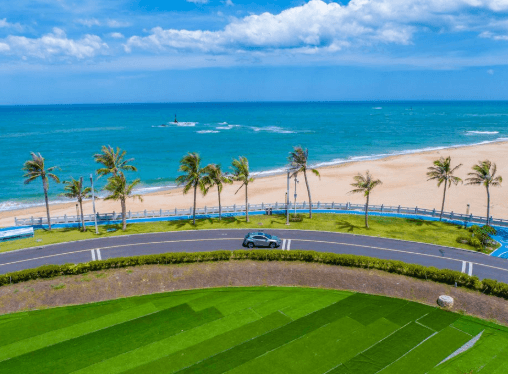
Hainan features the world’s first circular high-speed railway line. This 653-kilometer loop connects all coastal cities and allows travelers to circumnavigate the entire island in approximately five hours.
The rail system is divided into the East Ring and West Ring. The East Ring is the more popular route, connecting Haikou Meilan International Airport (HAK) directly to Sanya (SYX) via scenic stops in Wenchang, Qionghai, and Wanning. For travelers interested in the island’s “wilder” side, the West Ring provides access to the industrial landscapes of Dongfang and the pristine forests of Ledong. Tickets can be easily booked via the 12306 app, though international passports must be verified at a station ticket window upon the first use.
Cultural and Environmental Circuits Beyond the Beach
While the coastline attracts the most attention, the interior and the eastern “Coffee Coast” offer high-value cultural experiences.
- The Middle Route (Rainforest & Heritage): A journey through Wuzhishan (Five Finger Mountain) allows visitors to interact with the Li and Miao ethnic groups. Traditional brocade weaving and boat-shaped houses offer a glimpse into the island’s pre-modern history.
- The East Route (Surf & Aerospace): Wanning has emerged as China’s surfing capital, particularly at Shimei Bay and Riyue Bay. Further north, Wenchang offers the unique opportunity to witness satellite launches at the Wenchang Spacecraft Launch Site, the only coastal launch facility in China.
- The West Route (Salt & Stones): Ancient salt pans in Danzhou, dating back over 1,200 years, demonstrate historical solar evaporation techniques that are still in use today.
Practical Considerations for International Visitors
Operating within Hainan requires specific digital tools. While the island is a Free Trade Port, the “Great Firewall” still applies. However, many international luxury hotels provide high-speed internet that may bypass certain restrictions for guests.
- Payments: Cash is rarely used. It is essential to link an international Visa or Mastercard to Alipay or WeChat Pay before arrival.
- Connectivity: Purchase an eSIM or a local SIM card (China Unicom or China Mobile) at the airport to ensure access to navigation apps like Amap (Gaode) or Baidu Maps.
- Language: While hotel staff in Sanya often speak English, taxi drivers and local vendors generally do not. Keeping a translation app like DeepL or Google Translate (with offline packs) is highly recommended.
For those seeking structured exploration, services such as Sinotrip’s Hainan City Tours provide curated itineraries that bridge the gap between local logistical hurdles and international expectations. These packages often include the necessary registration for visa-free entry, private transfers between the disparate bays, and bilingual guides specialized in the island’s unique ecology.
자주 묻는 질문
What is the best time of year to visit Hainan?
The peak season is from November to March when the weather is dry and temperatures are mild (20°C–27°C). Avoid the Lunar New Year period, as prices can quadruple and beaches become extremely crowded.
Can I drive in Hainan with an International Driving Permit (IDP)?
No. China does not recognize the IDP. To drive a rental car, you must obtain a provisional Chinese driver’s license, which can often be applied for at the Sanya or Haikou airport traffic police service points with a valid foreign license and a translation.
Is Hainan expensive for tourists?
Hainan offers a broad spectrum of pricing. Sanya’s luxury resorts in Yalong or Haitang Bay are comparable to prices in Dubai or Singapore. However, the provincial capital, Haikou, and smaller cities like Wanning offer excellent value with significantly lower dining and accommodation costs.
Are there sharks or dangerous marine life in Hainan?
The waters around Hainan are generally safe for swimming. Shark attacks are virtually non-existent. The primary marine risks are jellyfish during certain seasons and strong rip currents, particularly in Haitang Bay. Always swim in designated areas with active lifeguards.
What should I pack for a Hainan trip?
Light, breathable clothing is essential year-round. Even in winter, the tropical sun is intense, so high-SPF sunscreen and polarized sunglasses are necessary. If visiting the central rainforests, bring sturdy hiking shoes and insect repellent.
Reference Sources
- Hainan Provincial Department of Culture and Tourism: Official Tourism Statistics and Regional Updates
- National Immigration Administration of China: Details on 59-Country Visa-Free Entry Policy
- UNESCO World Heritage Centre: Hainan Tropical Rainforest and the Settlement of Li Ethnic Group
- China Railway (12306): High-Speed Rail Schedule and Booking Infrastructure