
For the average tourist, Shenzhen is a glittering megacity of skyscrapers and parks. For the hardware engineer, OEM project manager, or B2B procurement consultant, the question of whether you should visit Shenzhen is not about leisure—it is about Return on Investment (ROI). Often called the “Silicon Valley of Hardware,” Shenzhen represents the most concentrated electronics supply chain on the planet.
Whether a trip to this Tier-1 Chinese hub is worth your resources depends on your mission: are you auditing a factory in Bao’an, sourcing components at Huaqiangbei, or seeking hardware prototyping at “Shenzhen speed”? This guide evaluates the city through a commercial and industrial lens to help you decide.
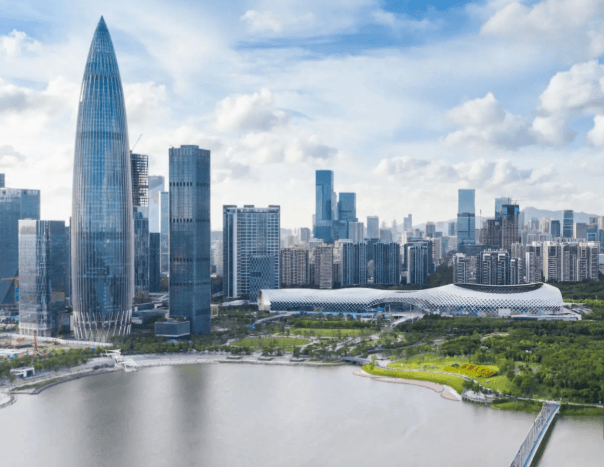
Why Tech Professionals and Sourcing Managers Visit Shenzhen
Shenzhen’s value proposition lies in its unprecedented supply chain density. In most global markets, moving from a PCB design to a functional prototype takes weeks. In Shenzhen, this iteration cycle is often compressed into days.
The Prototyping Ecosystem
Nanshan District serves as the R&D heart, housing giants like DJI and Tencent alongside thousands of hardware startups. If your goal is to evaluate the latest in AI integration, robotics, or IoT, Nanshan is essential. The collaborative environment between design houses and nearby trial-production lines is unmatched globally.
Component Sourcing at Scale
Futian District is home to Huaqiangbei, the world’s largest electronics market. Professionals visit Shenzhen specifically to navigate these multi-story hubs. Here, you can source everything from legacy semiconductors to the latest sensors directly from factory-authorized distributors or independent stockists.
Industrial Logistics: Mapping the City’s Strategic Districts
To determine if a visit is worth it, you must understand the geography of manufacturing logic. Shenzhen is not decentralized; it is a collection of specialized industrial clusters.
| District | Primary Industrial Focus | Why Professionals Visit |
| Bao’an | Advanced Manufacturing / OEM | Factory audits, CNC machining, and SMT line inspections. |
| Futian | Electronics Sourcing / Finance | Negotiating with component distributors in Huaqiangbei. |
| Nanshan | High-Tech R&D / Robotics | Software-hardware integration and tech partnerships. |
| Longgang | Telecom / Heavy Industry | Visiting major campuses like Huawei or large-scale plastic injection facilities. |
For procurement experts, visiting Bao’an is often the highest priority. This district facilitates the transition from “Made in China” to “Engineered in China,” featuring facilities that comply with ISO 9001 and IATF 16949 standards. Navigating these vast industrial zones requires precise planning, as traffic between Nanshan and the outer manufacturing parks can impact your audit schedule.
Evaluating the ROI: Business Travel vs. Remote Sourcing
Is it worth the flight and visa costs? For high-stakes OEM projects, the answer is usually yes. Physical presence allows for “real-world manufacturing logic” that digital communication cannot replicate.
- Direct Factory Audits: Seeing a supplier’s quality control (QC) station and testing equipment in person reduces the risk of “sampling bias.”
- On-site Troubleshooting: Engineers can sit with factory technicians to resolve DFM (Design for Manufacturing) issues on the spot.
- Relationship Building (Guanxi): In Chinese business culture, face-to-face meetings often unlock better lead times and more flexible payment terms.
However, the logistics of a business trip can be complex. Between navigating the Shenzhen-Hong Kong border and coordinating factory visits across different districts, the “soft costs” of travel can rise. Utilizing professional Shenzhen city travel services is a common strategy for B2B travelers. Services such as private airport transfers from Bao’an International (SZX) or bilingual car rentals with drivers can save hours of logistical delays, allowing you to focus on supplier evaluations.

The Trade-off: When Shenzhen Might Not Be the Right Choice
While Shenzhen is the hardware capital, it is not always the best fit for every sourcing project. If your product is highly specialized in textiles, you might find more value in Guangzhou. If your focus is on heavy chemicals or raw steel, northern industrial hubs like Tianjin may offer better proximity to raw materials.
Shenzhen has also become an expensive city. Labor costs here are higher than in inland provinces or Southeast Asian markets. If your project prioritizes “bottom-dollar” labor over technical sophistication and speed, the high overhead of a Shenzhen-based supply chain might not align with your cost-driver analysis.
Planning Your Visit: Logistics for the Modern Professional
If you decide to visit Shenzhen, your itinerary should be driven by the search funnel logic of your procurement phase.
- MOFU (Evaluation Phase): Spend time in Nanshan incubators and Futian markets to compare technical capabilities.
- BOFU (Transactional Phase): Focus your time in Bao’an or Longhua for final contract negotiations and production line sign-offs.
Logistically, the city is highly efficient. The metro system is world-class, but for high-stakes business, it is rarely suitable for transporting prototypes or visiting multiple factories in one day. Many procurement consultants rely on Sinotrip’s Shenzhen business travel support to manage cross-district transport. This ensures that the transition from a 9:00 AM factory audit in Bao’an to a 2:00 PM meeting in the Futian CBD is seamless and professional.
PREGUNTAS FRECUENTES
What is the best way to get from Hong Kong to Shenzhen for business?
The High-Speed Rail (HSR) from West Kowloon to Futian or Shenzhen North is the most efficient. It takes approximately 15–20 minutes and bypasses much of the road border congestion.
Do I need a visa to visit Shenzhen for sourcing?
Most business travelers require an M-class visa. Some nationalities are eligible for a 5-day Shenzhen VOA (Visa on Arrival), but this is typically restricted to the Shenzhen SEZ and is not recommended for high-stakes business trips.
Can I visit the Huaqiangbei markets on weekends?
Yes, the markets are generally open seven days a week. However, many factory-direct offices and bulk-order departments operate on a standard Monday–Friday business schedule.
What are the typical lead times for custom prototypes in Shenzhen?
For standard PCBAs or 3D-printed housings, 24–72 hour turnarounds are common. Complex CNC or injection mold tooling typically takes 15–30 days.
Is English widely spoken in the industrial districts?
In Nanshan tech parks, English is common. In the factories of Bao’an or the deep markets of Futian, it is limited. It is highly advisable to hire a professional translator or use a sourcing agent.
Reference Sources
- IEEE Xplore: Technical papers on Shenzhen’s hardware prototyping ecosystem and supply chain agility.
- SGS Group: Official manufacturing audit standards and compliance checklists for the Shenzhen region.
- Shenzhen Municipal Bureau of Commerce: Official industrial output data and district development reports. sz.gov.cn
- ISO International: Standards for quality management systems relevant to Chinese OEM manufacturing.
- Sinotrip Industrial Travel Data: Internal metrics on logistics efficiency for business travelers in the Pearl River Delta. sinotrip.net


