Navigating the Vertical Landscapes of Hunan: A Strategic Guide
Hunan Province, located in south-central China, presents a unique logistical challenge for international travelers. Unlike the flat urban expanses of Beijing or Shanghai, Hunan’s premier attractions—Zhangjiajie and Fenghuang—are defined by verticality and ancient riverine layouts. To maximize a visit here, one must understand the intersection of geological formations and modern high-speed infrastructure.
This guide moves beyond surface-level aesthetics to break down the technical aspects of navigating the Wuling Mountains and the Tuo River valley.
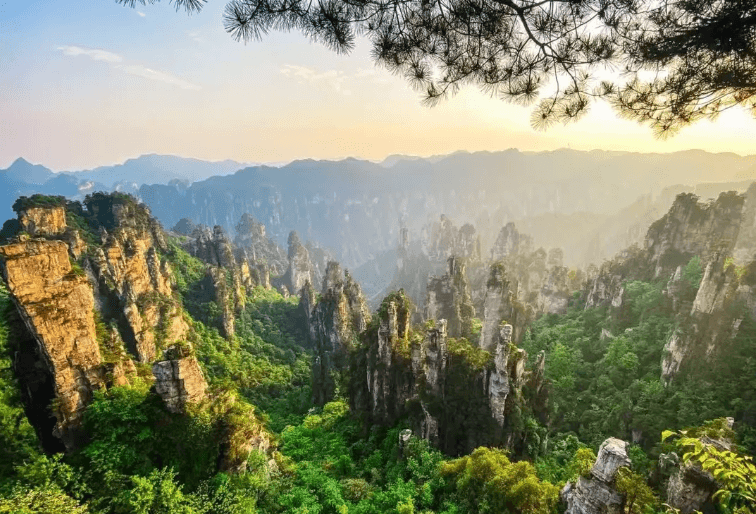
The Geological Architecture of Zhangjiajie
Zhangjiajie is not a single park but a massive administrative region containing several distinct scenic zones. Understanding the distinction between these zones is critical for time management and physical stamina.
Wulingyuan Scenic Area (The “Avatar” Peaks)
Wulingyuan is a UNESCO World Heritage site comprising over 3,000 quartz sandstone pillars. From a logistical standpoint, Wulingyuan is accessed via five main gates. The most efficient entry points for most itineraries are the Wujiayu Gate (East) and the Zhangjiajie National Forest Park Gate (South).
- The Upper Plateau: Accessible via the Bailong Elevator (the world’s tallest outdoor elevator) or the Tianzi Mountain Cableway. This area contains Yuanjiajie, the inspiration for the Hallelujah Mountains.
- The Golden Whip Stream: Located at the valley floor, this provides a 7km flat trekking route that offers a perspective on the pillar foundations.
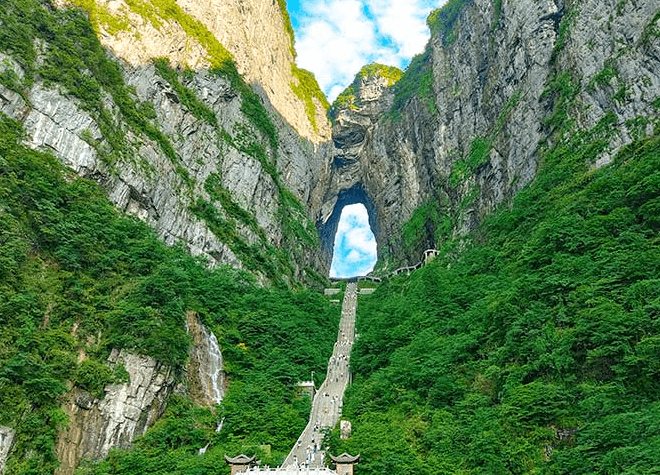
Tianmen Mountain: The Gateway to Heaven
Often confused with the Forest Park, Tianmen Mountain is located adjacent to the city center and requires a separate day. It is famous for the Tianmen Cave, a natural water-eroded karst hole. The technical highlight here is the 7.4km cableway—the longest in the world—which transports visitors directly from the city center to the mountain summit.
| Feature | Wulingyuan (Forest Park) | Tianmen Mountain |
| Primary Landform | Quartz Sandstone Pillars | Karst Tableland |
| Key Transport | Bailong Elevator / Internal Shuttles | World’s Longest Cableway |
| Duration | 2–3 Days | 4–6 Hours |
| Physical Intensity | Moderate to High (Stairs) | Low (Escalator-assisted) |
Fenghuang Ancient Town: Preservation and Hydraulic Design
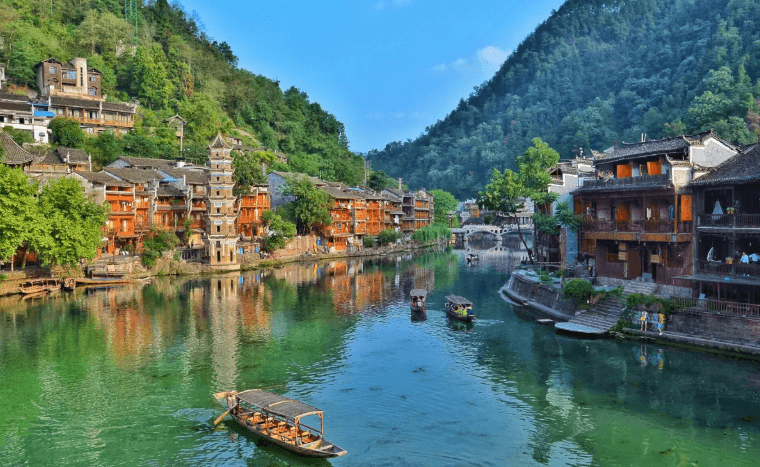
Located approximately 230km southwest of Zhangjiajie, Fenghuang (Phoenix Ancient Town) offers a sharp contrast to the rugged mountains. Established in 1704, the town’s layout is dictated by the Tuo River.
The architectural significance of Fenghuang lies in its Diaojiaolou (stilt houses). These timber structures are engineered to maximize living space along the narrow riverbanks while protecting against seasonal flooding. For the traveler, the town is best experienced through its pedestrian-only stone alleys.
Expert Tip: While the “core” town can be crowded during the day, the cultural depth is found in the early morning when the local Miao and Tujia ethnic groups engage in traditional riverside commerce.
Infrastructure: The Hunan High-Speed Rail Revolution
Historically, traveling between Changsha (the provincial capital), Zhangjiajie, and Fenghuang involved grueling 5-to-8-hour bus rides. The landscape changed significantly with the opening of the Zhangjiajie-Jishou-Huaihua High-Speed Railway.
- Changsha to Zhangjiajie: Now approximately 2.5 to 3 hours via HSR.
- Zhangjiajie to Fenghuang: Reduced to just 1 hour via high-speed train (arriving at Fenghuang Maglev station).
For international visitors, the high-speed rail (HSR) system provides a reliable, time-efficient alternative to private car transfers, though the latter remains the standard for those requiring “door-to-door” service between mountain hotels and scenic gates.
Itinerary Optimization and Technical Suitability
Planning a route through Northwest Hunan requires coordinating mountain transfers with limited entry slots. In professional travel planning, we categorize these into “Efficiency Modules.”
For those seeking a structured approach, analyzing standard Hunan tour configurations reveals that a 4-to-5-day window is the industry standard for a Zhangjiajie-Fenghuang circuit. This duration accounts for:
- Arrival Day: Changsha or Zhangjiajie City.
- Peak Immersion: 2 days dedicated to Wulingyuan’s varying elevations.
- The Ascent: 0.5 days for Tianmen Mountain.
- Cultural Transition: 1.5 days for the Fenghuang riverside experience and return transit.
Selecting a pre-vetted itinerary helps mitigate the “terrain fatigue” often associated with navigating the thousands of stone steps and complex shuttle bus interchanges within the parks.
Climatic and Seasonal Constraints
Hunan’s weather is characterized by high humidity and significant seasonal variance.
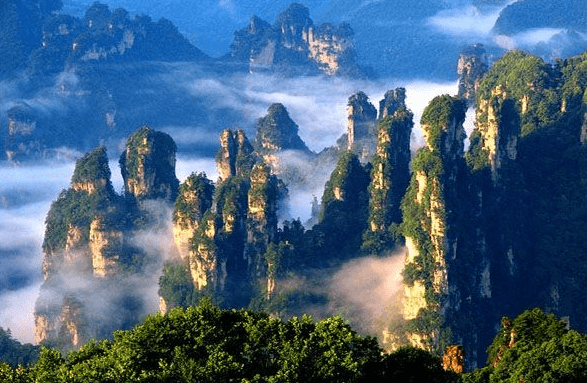
- April to June: The “Cloud Sea” season. High humidity creates the iconic mist around the pillars, though rain is frequent.
- September to November: The most stable weather. Clear visibility is ideal for photography of the sandstone textures.
- Winter (December to February): Low season. Snow transforms the pillars into a stark, monochromatic landscape, but certain trails and cableways may close for maintenance or safety during heavy icing.
PREGUNTAS FRECUENTES
Q1: Is the Zhangjiajie Glass Bridge located in the National Forest Park?
No. This is a common misconception. The Glass Bridge is located in the Grand Canyon Scenic Area, which is about 40 minutes by car from the Wulingyuan (Forest Park) entrance. It requires a separate ticket and booking slot.
Q2: How much physical fitness is required for a Hunan tour?
While modern infrastructure like the Bailong Elevator and various cableways have reduced the need for vertical climbing, a typical day in Zhangjiajie still involves 10,000+ steps on uneven stone surfaces. It is categorized as “moderately demanding.”
Q3: Can I visit Zhangjiajie and Fenghuang independently without a guide?
It is possible, but logistically challenging. Signage inside the parks is improving but remains complex. Because the “scenic shuttle” system inside Wulingyuan operates like a city bus network without a clear map, many independent travelers lose hours taking the wrong direction.
Q4: What is the best entry point for international flights?
Changsha Huanghua International Airport (CSX) is the primary gateway with the most international connections. From there, you can take the HSR directly to Zhangjiajie West Station.
Reference Sources
- UNESCO World Heritage Centre: Wulingyuan Scenic and Historic Interest Area Data Sheet.
- China Railway Map: High-speed rail network updates for the Xiangxi Tujia and Miao Autonomous Prefecture.
- Hunan Provincial Department of Culture and Tourism: Official statistics on visitor flow and seasonal park maintenance schedules.
- SGS (General Society of Surveillance): Safety standards for large-scale outdoor lift and cableway systems in mountainous terrains.