

How Many Days Do You Need in Xi’an? 1–4 Day Itinerary Guide
For most first-time visitors, 2 to 3 days in Xi’an is enough to see the Terracotta Army, walk the Ancient City Wall, explore the Muslim Quarter and experience some of the city’s Tang Dynasty heritage without turning the trip into a checklist.
If you have only one day, prioritize the Terracotta Army and one or two central Xi’an sights. Two days covers the main highlights at a fairly active pace. Three days is more comfortable and gives you time for museums, food and the Big Wild Goose Pagoda area. Four days makes sense if you want a deeper look at Xi’an’s archaeology and history or want to add a nearby excursion.
One reason not to underestimate travel time is the location of the Terracotta Army. The UNESCO-listed Mausoleum of the First Qin Emperor is around 35 kilometers northeast of Xi’an, so it should normally be treated as a dedicated half-day or longer outing rather than squeezed between several city-center attractions.
This guide compares what you can realistically see in 1, 2, 3 or 4 days in Xi’an and helps you decide how long to stay based on your interests.
How Many Days Should You Spend in Xi’an?
Here is the short answer:
| Time in Xi’an | Best For | What You Can Cover |
|---|---|---|
| 1 Day | Very limited schedules | Terracotta Army + one central Xi’an area |
| 2 Days | First-time highlights | Terracotta Army, City Wall, Muslim Quarter, Big Wild Goose Pagoda |
| 3 Days | Most first-time travelers | Major sights + museums + food + Tang heritage |
| 4 Days | History and culture travelers | Deeper archaeology, museums and an additional excursion |
| 5+ Days | Slow travel | Xi’an plus surrounding Shaanxi destinations |
For most international travelers visiting Xi’an for the first time, three days provides the best balance between seeing the famous attractions and having enough time to understand the city beyond the Terracotta Army.
Two days is still enough if your China itinerary is tight.
One Day in Xi’an: Can You See Enough?
Yes, but one day in Xi’an requires careful prioritization.
If the Terracotta Army is the main reason you are visiting, make it the anchor of your day.
Morning: Terracotta Army
Start with the Emperor Qinshihuang’s Mausoleum Site Museum and the Terracotta Warriors.
The mausoleum complex is one of China’s most important archaeological sites. UNESCO inscribed the Mausoleum of the First Qin Emperor on the World Heritage List in 1987.
Because the site is outside central Xi’an, allow for transportation in both directions rather than thinking only about the time spent inside the museum.
Afternoon: Xi’an Ancient City Wall
Return to central Xi’an and visit the Ancient City Wall.
Walking part of the wall gives you a useful perspective on the old city layout. Travelers with more energy can spend longer exploring the wall before continuing into the historic center.
Evening: Muslim Quarter or Bell and Drum Towers
Finish the day around the Muslim Quarter, Bell Tower and Drum Tower area.
The Muslim Quarter is particularly useful for a short visit because it combines food, street life and local Hui cultural influences without requiring another long transfer.
One day in Xi’an is possible, but rushed. It works best for travelers passing through the city rather than those who want to understand its history in depth.
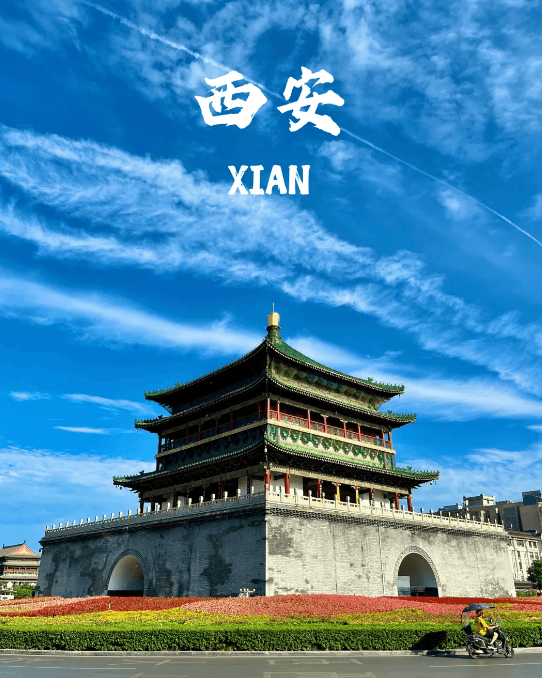
Two Days in Xi’an: Enough for the Main Highlights
For many travelers on a longer China itinerary, two days in Xi’an is enough to see the essential attractions.
The key is to separate the Terracotta Army from the main city-center sights.
Day 1: Terracotta Army + Central Xi’an
Spend the morning and early afternoon visiting the Terracotta Army.
After returning to the city, keep the evening relatively flexible.
Depending on your energy and arrival time, explore:
- Bell Tower
- Drum Tower
- Muslim Quarter
- Local Xi’an food
This avoids trying to fit another major museum or distant attraction into an already transport-heavy day.
Day 2: City Wall + Big Wild Goose Pagoda + Tang Heritage
Start with the Xi’an Ancient City Wall.
Later, continue toward the Big Wild Goose Pagoda area.
The Giant Wild Goose Pagoda dates to the Tang Dynasty and is closely associated with the Buddhist monk Xuanzang and the translation of Buddhist scriptures. It is also part of the UNESCO-listed Silk Roads: the Routes Network of Chang’an-Tianshan Corridor.
In the evening, you can remain around the pagoda and nearby Tang-themed cultural district or return to central Xi’an.
Two days works particularly well for travelers who:
- Want to see the Terracotta Army
- Are visiting Xi’an as part of a Beijing–Xi’an–Shanghai route
- Prefer major landmarks over extensive museum visits
- Do not mind a relatively active itinerary
Is 2 Days Enough for Xi’an?
Yes. Two full days are enough for the main Xi’an highlights.
You can comfortably dedicate one part of the trip to the Terracotta Army and use the remaining time for the Ancient City Wall, Muslim Quarter and Big Wild Goose Pagoda area.
The limitation is depth.
With only two days, you may have to choose between spending several hours in a museum, exploring additional archaeological sites or having a slower food and neighborhood experience.
If Xi’an’s history is one of the main reasons for your China trip, adding a third day is worthwhile.
Three Days in Xi’an: Recommended for First-Time Visitors
Three days gives you much more breathing room without making the stay unnecessarily long.
For most first-time visitors interested in both famous landmarks and the history behind them, three days is a comfortable amount of time in Xi’an.
Day 1: Terracotta Army
Make the Terracotta Army the main focus.
Rather than rushing back for several more attractions, use the evening for dinner and a relaxed walk around central Xi’an.
If the Terracotta Army is your main reason for visiting the city, see SinoTrip’s Best Xi’an Tours & Terracotta Army: A Planning & Logistics Guide for more detailed planning information.
Day 2: Ancient City Wall + Muslim Quarter + Historic Center
Spend the second day exploring central Xi’an.
A practical sequence is:
- Ancient City Wall
- Bell Tower
- Drum Tower
- Muslim Quarter
- Great Mosque area
These sights are more naturally grouped together than combining them with the Terracotta Army.
The Muslim Quarter also gives you time to try Xi’an specialties such as roujiamo and paomo instead of treating food as something squeezed between attractions.
Day 3: Big Wild Goose Pagoda + Museum + Tang Culture
Use the third day to explore Xi’an’s Tang Dynasty heritage.
Possible stops include:
- Big Wild Goose Pagoda
- Shaanxi History Museum
- Grand Tang Mall
- Nearby cultural attractions
The Shaanxi History Museum is particularly useful for travelers who want more context for the archaeological sites and dynasties associated with Xi’an.
Xi’an served as the capital of multiple Chinese dynasties, and the museum’s collections cover a much broader historical period than the Qin Dynasty alone.
Finish the trip around the Big Wild Goose Pagoda and Tang cultural district in the evening.
Two Days vs Three Days in Xi’an
If you are deciding whether to add another night, the difference is mainly pace and historical depth.
| Experience | 2 Days | 3 Days |
|---|---|---|
| Terracotta Army | Yes | Yes |
| Ancient City Wall | Yes | Yes |
| Muslim Quarter | Yes | Yes |
| Bell & Drum Towers | Yes | Yes |
| Big Wild Goose Pagoda | Yes | Yes |
| Shaanxi History Museum | Possible | Easier to include |
| Food exploration | Limited | More relaxed |
| Tang cultural areas | Limited | More time |
| Overall pace | Active | Comfortable |
Two days covers the essentials.
A third day gives you noticeably more room for museums, food and Tang-era heritage without compressing several major attractions into the same day.
Four Days in Xi’an: For a Deeper Trip
Four days becomes useful if archaeology, Chinese history or museums are a major part of your trip.
Use the first three days for the core itinerary, then dedicate the fourth day to something more specific.
Possible options include:
Huaqing Palace
Huaqing Palace is located in the Lintong area and can be combined with a deeper exploration of sites outside central Xi’an.
Additional Museums
Xi’an has an unusually rich museum landscape.
Instead of visiting another major tourist attraction simply to fill the day, history-focused travelers may prefer the Xi’an Museum, archaeological museums or more specialized collections.
Mount Hua
Travelers interested in mountain scenery can consider a separate trip to Mount Hua.
This requires significantly more time and physical planning than central Xi’an sightseeing, so it should not be casually added to an already full day.
Slower Exploration of Xi’an
A fourth day does not have to mean another excursion.
You can spend more time exploring neighborhoods, food, temples, museums and sections of the city that are easily skipped on a two-day itinerary.
How Much Time Should You Allow for the Terracotta Army?
For itinerary planning, treat the Terracotta Army as at least a half-day experience once transportation is included.
The archaeological site is about 35 kilometers northeast of Xi’an, according to UNESCO, so it is not comparable to visiting the Bell Tower or Muslim Quarter in the city center.
Your total time will depend on:
- Starting location
- Transportation
- Entry arrangements
- Crowds
- How deeply you want to explore the museum
- Whether you combine the visit with another Lintong attraction
Avoid scheduling a fixed-time city attraction immediately after returning from the Terracotta Army unless you have allowed enough buffer.
How to Plan Your Xi’an Days Efficiently
Xi’an becomes easier to plan when you group attractions geographically and by theme.
Keep the Terracotta Army Separate
Do not treat it as a central Xi’an attraction.
Its location outside the city means transportation should be part of your time calculation.
Group the Historic Center Together
The City Wall, Bell Tower, Drum Tower, Muslim Quarter and nearby historic streets fit naturally into the same part of your itinerary.
This reduces unnecessary transfers.
Group Tang-Era Attractions Together
The Big Wild Goose Pagoda, Shaanxi History Museum and nearby Tang cultural areas work well as another sightseeing cluster.
The Big Wild Goose Pagoda itself has strong historical significance: Xi’an’s municipal government notes its association with Xuanzang and its role in preserving and translating Buddhist scriptures brought from India.
Check Museum Reservations Before Finalizing the Day
Popular museums and heritage attractions may use reservations or timed admission.
Check current official requirements before building the rest of the day around a specific museum visit.

When Should You Stay Longer Than Three Days?
Consider four or more days if:
- You are especially interested in Chinese archaeology
- You want to visit several museums
- You prefer slower travel
- You want to add Mount Hua or another excursion
- Xi’an is one of the main historical destinations of your China trip
- You want more time for food and neighborhoods rather than only famous attractions
If you mainly want to see the Terracotta Army and the most recognizable city landmarks, staying five or six days is usually unnecessary unless Xi’an is being used as a base for wider Shaanxi travel.
How Xi’an Fits Into a Longer China Itinerary
Xi’an is often combined with Beijing, Shanghai, Chengdu and other major Chinese destinations.
Its role in a multi-city itinerary is quite different from those cities.
Beijing provides imperial architecture and major national monuments, while Xi’an is especially strong for archaeology, early imperial history, Silk Road heritage and Tang Dynasty culture.
Travelers planning a longer route can explore SinoTrip’s China private tours and customized itineraries to see how Xi’an can fit alongside other destinations without adding unnecessary travel days.
For broader information about attractions, transport and planning beyond the question of how many days to stay, see SinoTrip’s Xi’an Travel Guide 2026: Expert Insights to the Terracotta Warriors.
常見問題
How many days do you need in Xi’an?
For most first-time visitors, 2 to 3 days is enough. Two days covers the major highlights, while three days provides a more comfortable pace with additional time for museums, food and Tang Dynasty heritage.
Is 2 days enough for Xi’an?
Yes. With two full days, you can visit the Terracotta Army, Ancient City Wall, Muslim Quarter and Big Wild Goose Pagoda area if you organize the itinerary efficiently.
Is 3 days enough for Xi’an?
Yes. Three days is a comfortable length for most first-time visitors and gives you more time for the Shaanxi History Museum, food and central Xi’an.
Can you visit Xi’an in one day?
Yes, but the trip will be rushed. If you have only one day, prioritize the Terracotta Army and one central Xi’an area rather than trying to cover every major attraction.
How long do you need for the Terracotta Army?
Plan at least half a day once transportation from central Xi’an is included. Travelers who want to explore the museum slowly or add another Lintong attraction should allow more time.
Is Xi’an worth staying four days?
Four days can be useful for travelers particularly interested in archaeology, museums and Chinese history, or those planning an additional excursion.
Should I spend two or three days in Xi’an?
Choose two days if your China itinerary is limited and you mainly want the famous highlights. Three days provides a more relaxed experience and makes it easier to include museums, Tang heritage and local food.
最終想法
So, how many days do you need in Xi’an?
For most first-time visitors:
1 day: Possible, but rushed.
2 days: Enough for the essential sights.
3 days: The most comfortable choice for major attractions, museums and food.
4 days: Better for deeper history, archaeology or an additional excursion.
The Terracotta Army deserves dedicated time because it lies outside central Xi’an, while attractions such as the City Wall, Muslim Quarter and Bell and Drum Towers can be grouped much more efficiently.
If Xi’an is only one stop on a longer China journey, two days can work well. If archaeology, Silk Road history and Tang Dynasty culture are important to you, three days gives the city much more room to make sense.