Many travelers fail to see the best of Guilin because they get stuck in tourist traps at the wrong piers. That is why our 2026 Guilin Travel Guide, based on 15 years of local scouting, ensures you navigate the Li River like a pro. However, for international visitors, this Guilin Travel Guide highlights that you still need a solid plan. After all, success depends on understanding local logistics, seasonal changes, and transport options.
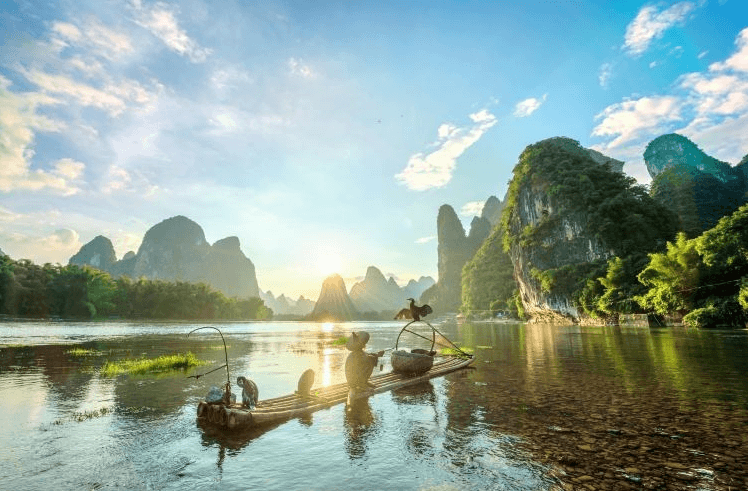
Geographically, Guilin is located in northeast Guangxi and is a vast area of natural wonders. The 164-kilometer Li River is the main route for seeing the region’s tall karst peaks. In fact, these mountains formed over 300 million years ago. To help you, this Guilin Travel Guide explains how to explore them best using both river cruises and land travel.
The Mechanics of the Li River Cruise: A Logistical Breakdown
The Li River cruise is the foundational experience of any Guilin itinerary. However, the experience varies significantly based on the vessel “specifications” and departure points. Travelers typically choose between the standard 3-star vessels and the premium 4-star cruisers.
The Transit Corridor: Guilin to Yangshuo
The primary cruise route spans approximately 83 kilometers from Guilin city to Yangshuo. The journey takes 4 to 5 hours, depending on the river’s water levels and seasonal flow rates.
- 3-Star Vessels: These are the workhorses of the river. They offer standard seating and a simple boxed lunch. They typically depart from Mopanshan Pier.
- 4-Star Vessels: These represent the “Executive Class” of the river. These boats feature lower passenger density, buffet dining, and superior viewing decks. They usually depart from Zhujiang Pier.
Crucially, all cruises leave in the morning between 9:00 AM and 10:30 AM. Keep in mind that there are no afternoon or evening boats from Guilin to Yangshuo. Therefore, the best plan is to stay in Guilin the night before. Then, you can take the cruise to Yangshuo and stay there to explore the mountains on land.
Navigating the Karst Topography: Key Geologic Landmarks
Beyond the river, the region’s “Top Authority” status in geography comes from its unique karst hills. Unlike traditional mountain ranges, karst peaks are isolated, steep-sided hills.
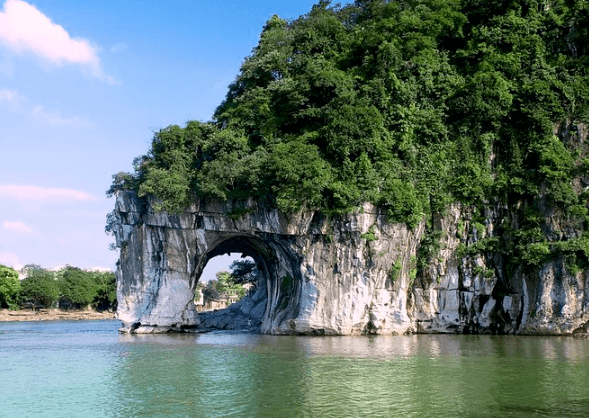
- Elephant Trunk Hill (The City Symbol): Located at the confluence of the Li River and the Taohua River, this formation resembles an elephant drinking from the water. It is a critical landmark for understanding the water-erosion history of the region.
- The 20-Yuan Note Scenery (Yellow Cloth Reflection): Near the town of Xingping, the river widens, and the reflections of the peaks on the still water create a symmetrical visual that is immortalized on Chinese currency.
- Reed Flute Cave: An underground karst system. For those interested in the “internal” manufacturing of karst, this cave showcases stalactites and stalagmites formed over millions of years of mineral precipitation.
Seasonal Optimization and Visibility
Guilin’s performance as a destination is highly dependent on the “Weather vs. Visibility” tradeoff. The region experiences a subtropical monsoon climate, which dictates river levels and the famous “misty karst” aesthetic.
| Season | Aesthetic Characteristics | Logistical Considerations |
| Spring (March–May) | Misty, ethereal, “Classical Chinese Painting” style. | High humidity; occasional cruise cancellations if water levels rise too fast. |
| Summer (June–August) | Vibrant green peaks, clear blue skies, high visibility. | Peak heat and peak domestic crowds. Afternoon thunderstorms are common. |
| Autumn (Sept–Nov) | Golden light, cool temperatures, stable water levels. | The “Gold Standard” for photography and hiking in the Longji Rice Terraces. |
| Winter (Dec–Feb) | Low water levels, quiet, fewer crowds. | Some river sections may be too shallow for 4-star boats; smaller rafts used instead. |
Extended Exploration: The Longji Rice Terraces
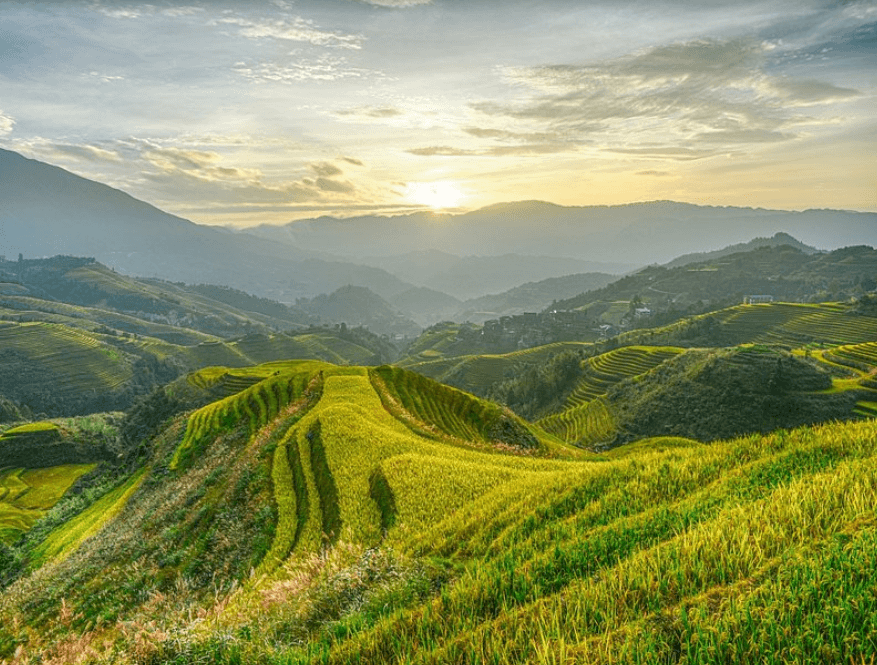
This Guilin Travel Guide also includes the Longji Rice Terraces. They are located two hours north of Guilin. Built 650 years ago, these terraces are a wonder of ancient engineering. They climb the mountains from 300 up to 1,100 meters high.
The terraces offer a dynamic visual cycle:
- Mirror Phase (May): When the paddies are irrigated, reflecting the sky.
- Green Phase (June–August): Lush, growing stalks.
- Golden Phase (September–October): The harvest season where the entire mountainside turns yellow.
Travel Planning and Compliance
International visitors can often use the 72/144-hour visa-free transit. This policy applies if you fly through Guilin Airport to a third country. However, you usually need at least three to five days to see the Guilin, Yangshuo, and Longji area properly.
Next, when looking at Guilin tour packages, it is important to compare group tours and private tours. For example, private tours offer much more flexibility. You can visit the “Seven Stars Accompany the Moon” viewpoint early to avoid the midday heat. Additionally, private tours provide easy car transfers from Yangshuo back to the high-speed rail stations.
FAQ: Professional Traveler Inquiries
Q1: Is it better to stay in Guilin or Yangshuo?
Guilin is a logistical hub with high-end hotels and proximity to the airport/train station. Yangshuo is the “activity hub,” closer to the mountains, hiking trails, and the Impression Sanjie Liu light show. A balanced 4-day itinerary usually splits time between both.
Q2: How do I handle luggage during the Li River cruise?
Most 3-star and 4-star boats have dedicated luggage storage areas. You bring your bags on the boat in Guilin and disembark with them in Yangshuo. If you have a private driver, they will typically transport your luggage by road to your Yangshuo hotel while you are on the river.
Q3: What is the “Bamboo Rafting” experience vs. the Large Cruise?
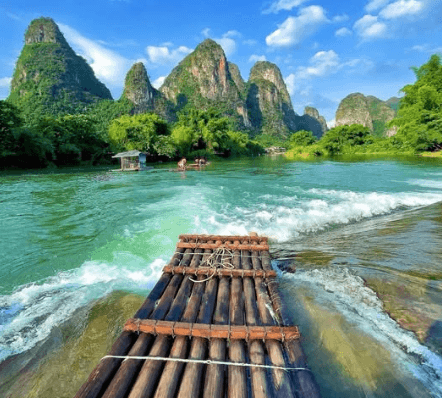
Bamboo rafts (now mostly motorized for safety) operate on smaller sections of the river, such as the Yulong River or the Xingping section of the Li River. These offer a “closer-to-the-water” perspective but do not cover the full distance that the large cruisers do.
Q4: Can Guilin be visited as a day trip from Hong Kong or Guangzhou?
Yes, via the high-speed rail network. The journey from Hong Kong West Kowloon to Guilin takes roughly 3.5 hours, making it a viable long-weekend destination.
Reference Sources
- UNESCO World Heritage Centre: South China Karst definition and protected zones. Link to UNESCO
- IATA Travel Centre: China visa-free transit requirements and regional policies. Link to IATA
- China National Tourist Office (CNTO): Official regional seasonal data for Guangxi. Link to CNTO
- Guilin Tourism Bureau: Technical specifications for Li River vessel classifications.